
In industries ranging from construction and engineering to interior design and surveying, the accuracy of a single measurement can determine the success or failure of an entire project. Whether you are laying the foundation for a new building, installing cabinetry, or mapping out a large-scale civil engineering site, the tools you use to measure distance are among the most critical assets in your toolkit.
Gone are the days when a steel tape measure was the only option for obtaining a length. Today, professional distance measurement tools combine laser technology, digital interfaces, and robust durability to deliver precision at the push of a button.
The Shift from Traditional to Digital
Traditional tools like folding rulers and tape measures have their place—they are simple, reliable, and don’t require batteries. However, they come with inherent limitations: human error in reading markings, physical fatigue over long distances, and difficulty measuring in hard-to-reach areas.
Professional laser distance measurers (LDMs) have revolutionized the industry. With a typical accuracy of ±1.5 mm and a range that can extend from 50 meters to over 200 meters, these handheld devices allow a single user to measure distances that would otherwise require two people and a long tape.
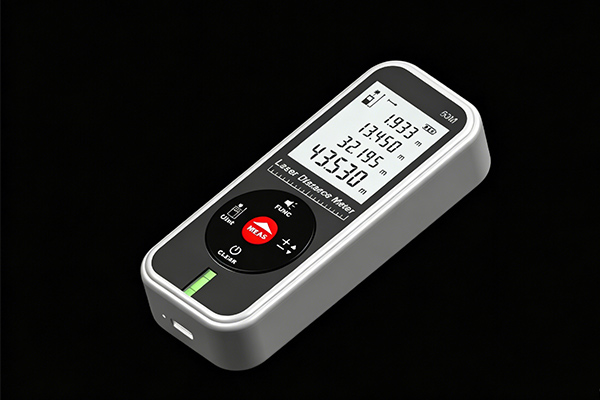
Key Features of Professional Distance Measurement Tools
When selecting the right tool for the job, look for the following features:
1. Laser Precision: Modern laser measurers emit a visible laser beam that lands exactly on the target point. This eliminates guesswork and ensures that you are measuring from the correct starting point—be it a corner, edge, or a reference mark.
2. Continuous Measurement Mode: Often called “tracking” or “real-time” mode, this feature updates the display in real time as you move the device. It is invaluable for positioning furniture, hanging pictures, or checking parallel alignments.
3. Pythagorean (Indirect) Measurement: This intelligent feature uses trigonometry to calculate height or width indirectly. For example, you can measure the height of a ceiling or a tall tree by taking two or three distance readings, without ever climbing a ladder.
4. Data Storage and Bluetooth Connectivity: High-end professional tools store the last 20, 50, or even 100 measurements. Advanced models offer Bluetooth or USB connectivity, allowing you to transfer data directly to a smartphone, tablet, or drawing software like AutoCAD. This reduces transcription errors and streamlines workflow.
5. Environmental Durability: Job sites are demanding. Professional tools are built with IP54 or higher ratings (dust and water resistance) and feature rubberized armor to survive drops from up to 1.5 meters.
Applications Across Industries
● Construction & Carpentry: Measuring floor areas for materials (tiles, wood, concrete), checking wall plumbness, and laying out room dimensions.
● Real Estate & Appraisal: Quickly calculating square footage for property listings and floor plan drawings.
● Fire & Rescue: Determining safe distances at emergency scenes or measuring building setbacks from a safe perimeter.
● HVAC & Electrical: Positioning vents, outlets, and fixtures precisely according to blueprints.
Why Precision Matters
A measurement error of just 1% over 30 meters means a deviation of 300 mm—enough to misalign a steel beam or cause costly rework. Professional distance measurement tools reduce that error to a fraction of a millimeter. When you consider the cost of materials, labor, and time, investing in a high-quality measuring instrument is not an expense; it is an investment in quality control and efficiency.