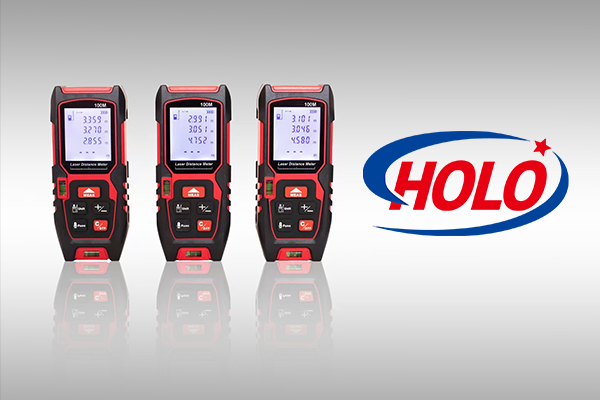
The morning sun filters through the high windows of the factory, casting geometric light spots on the brand-new car chassis. Engineer Wang no longer needs to climb back and forth, pulling a tape measure to double-check repeatedly—with a few taps on his laser measuring device, 1.5-millimeter precision 3D data is transmitted to the control center in real time. Not far away, Foreman Li at the construction site is using a laser scanner to quickly create a digital model of the demolition area, with an error of no more than 2 centimeters. Thousands of miles away at an archaeological site, researchers are mapping a millimeter-level digital archive of the Terracotta Army pits using lidar.
The Invisible Driver of Industrial Innovation
The core advantage of laser measurement technology lies in its revolutionary non-contact precision detection. Traditional measurement is often limited by errors from physical contact, the operator’s skill level, and environmental constraints. A laser beam, however, can reach hard-to-access corners without contact, work stably in high-temperature, high-pressure, or hazardous environments, and reduce subjective errors to nearly zero.
In high-end manufacturing, this precision is redefining quality standards. In aircraft manufacturing workshops, laser trackers ensure the assembly error of meter-long wings is no wider than a human hair. In chip factories, laser interferometers monitor the nanoscale movement trajectories of lithography machines. It is these invisible laser beams that form the cornerstone of the precision leap in modern industry.
Empowering the Digital Transformation of Traditional Industries
The significance of laser measurement equipment extends far beyond replacing tape measures. It is essentially a bridge that accurately converts the physical world into the digital world. In the construction engineering field, 3D laser scanners can complete the digital modeling of an entire construction site in hours, and the generated visual data becomes the core of BIM (Building Information Modeling). Compared with traditional methods, efficiency is improved by more than 80%, and it can continuously monitor construction deviations to warn of potential risks.
The cultural relic protection field has thus ushered in a new era. The Dunhuang Academy has established digital archives of grottoes using laser scanning, with a precision of 0.03 millimeters. This not only permanently preserves the information of fading murals but also allows researchers worldwide to conduct high-precision studies without touching the physical objects. When measurement evolves from “obtaining dimensions” to “building digital twins,” data generates value beyond measurement itself.
The Future of Intelligent Integration Is Here
Modern laser measuring device has evolved into intelligent terminals integrating measurement, calculation, and connectivity. Equipped with built-in processors and wireless transmission modules, the measured data can be directly compared with design drawings in the cloud, automatically generating deviation reports. On intelligent manufacturing assembly lines, laser measurement sensors monitor product quality in real time, and any out-of-tolerance issues trigger automatic adjustment instructions, realizing a true “perception-decision-execution” closed loop.
This intelligence is penetrating the consumer sector. Household laser rangefinders can directly generate room floor plans through mobile apps and calculate the amount of decoration materials needed. The built-in LiDAR sensors in mobile phones make AR measurement readily available. Measurement has transformed from a professional tool into a digital capability for ordinary people, quietly changing the way we interact with physical space.
New Challenges Behind Precision
However, extreme precision also brings new requirements. Laser measurement places different demands on the operator’s knowledge structure—they need to understand the basic principles of coordinate systems, point cloud processing, and data analysis. Issues such as equipment calibration and maintenance, characteristic differences in measurement on different material surfaces, and ambient light interference have become new topics that must be mastered.
A more profound challenge lies in data management. A single large-scale project can generate hundreds of gigabytes of laser scanning data. How to efficiently store, process, and extract valuable information is driving the measurement industry to transform from equipment sales to “data services.” The role of measurement engineers is also evolving into that of data analysts.
The Reconstruction of Measurement Philosophy
Essentially, the process of human cognition of the world has always been accompanied by improvements in measurement precision. Laser measurement technology provides not only a new tool but also a way of thinking to re-examine space and form. When we can easily obtain massive amounts of accurate spatial data, we begin to pay attention to previously overlooked details such as deformation, micro-displacement, and dynamic change processes.
This thinking is changing the way urban planners view urban texture, the way doctors analyze organ shapes, and the way we understand the evolution of historical cultural relics. Measurement, once a purely technical action, has become a key node connecting physical reality and digital innovation thanks to the integration of lasers.
As night falls, Engineer Wang reviews the day’s measurement data stream in his office, and the 3D model automatically marks three assembly points that need adjustment. He remembers his master’s words twenty years ago: “Close enough is good enough,” and can’t help but feel a surge of emotion. The laser measurement equipment lies quietly on the tool rack, with red light spots flickering occasionally, like an eye observing the world, quietly redefining our entire relationship with precision. In this world depicted by data, every laser beam is participating in writing a new history of precision civilization.