
Goodbye to the era of tape measures, as laser distance meters usher in a new age of measurement
Throughout the long history of human architecture and manufacturing, the tape measure has been an indispensable tool. From the construction of ancient Egyptian pyramids to the rise of modern skyscrapers, a simple metal or cloth-measuring device has witnessed the progress of human civilization. However, with the rapid advancement of technology, a new measurement method is quietly transforming our work and daily lives—laser distance meters are leading us into a new era of precise, efficient, and intelligent measurement.
Limitations of Traditional Measurement
Traditional tape measure methods have numerous limitations: they are prone to errors due to gravity sagging during long-distance measurements; require two people to collaborate for extended measurements; pose safety risks in complex spaces or high-altitude measurements; rely on visual judgment for readings, leading to potential visual errors; and necessitate manual data recording, which is error-prone and inefficient. These issues are particularly pronounced in large-scale engineering, precision manufacturing, and complex spatial design.
The Revolution of Laser Ranging
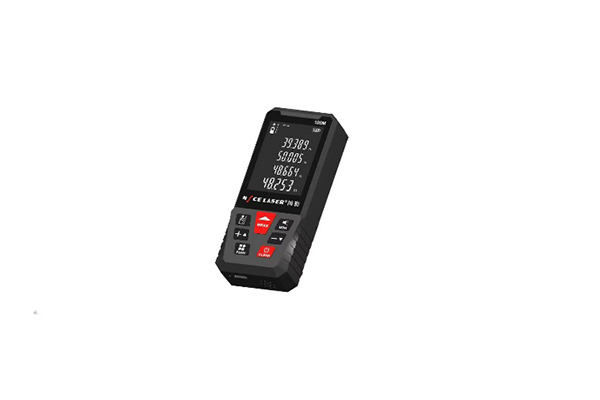
The advent of laser ranging technology has fundamentally transformed the nature of measurement work. Based on the time-of-flight principle, this device emits laser pulses and calculates the reflected time to instantly determine distances with millimeter-level precision. From single-point distance measurement to area and volume calculations, and from indirect height measurement to continuous tracking mode, the functionality of laser distance meters continues to expand, with increasingly diverse application scenarios.
In the field of architectural design, designers can quickly obtain precise dimensions of complex spaces; in interior decoration, construction workers can accurately calculate material quantities; in the real estate industry, brokers can efficiently measure property areas; in industrial production, engineers can precisely install and debug equipment; and even in daily home life, ordinary people can easily measure furniture dimensions or wall areas.
The Future of Intelligent Integration
Modern laser distance meters are no longer simple distance-measuring tools but comprehensive measurement devices integrated with various intelligent functions. Through Bluetooth or Wi-Fi connections, measurement data can be synchronized in real time to smartphones or tablets and directly imported into CAD software or construction drawings. Some high-end models can also generate 3D point cloud models, enabling digital reconstruction of spaces. Combined with AR (augmented reality) technology, users can even visualize measurement results and design plans in real-world environments.
Challenges and Adaptation
Although laser distance meters offer significant advantages, their widespread adoption still faces several challenges: high-end equipment comes at a premium; measurement accuracy may be compromised in environments with strong light or special reflective surfaces; and some older professionals require time to adapt to new technology operation. However, with technological advancements and cost reductions, these barriers are gradually being overcome. An increasing number of vocational training programs are incorporating laser measurement technology into their curricula, accelerating this transition process.
The Dawn of a New Measurement Era
The laser distance meter is not merely an update to a tool but represents a fundamental shift in working methods. It reduces measurement time, enhances data accuracy, minimizes human errors, liberates manpower, and ultimately boosts the overall productivity and safety of the entire industry. This transformation is in line with the trend of digitization and intelligence, and is an important component of the construction and manufacturing industries moving towards Industry 4.0.
From tape measures to laser distance meters, what we witness is not only the evolution of measuring tools, but also the relentless pursuit of precision, efficiency, and working methods by humans. In the new era of measurement opened by laser distance meters, we are exploring and shaping the space we live in with unprecedented precision. This is not just a technological upgrade, but also a revolutionary change in the way humans communicate with space.
When we bid farewell to the era of tape measures, what we are welcoming is not only a new tool, but also a more precise, efficient, and intelligent creation of the future. In this new era, every flicker of laser is a deepening of human intelligence’s understanding of space and a small step towards building a better world.