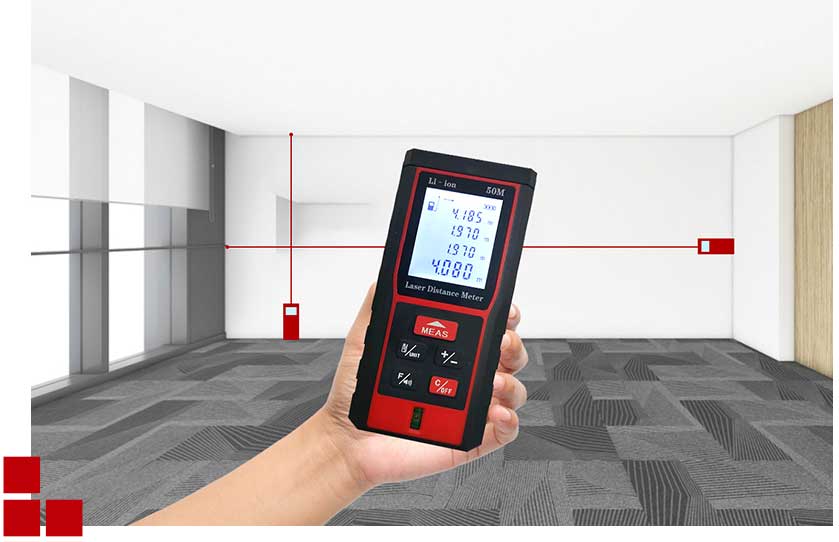
Distance meters—encompassing laser measures, ultrasonic rangefinders, and sophisticated total stations—have revolutionized measurement tasks across construction, interior design, real estate, and DIY projects. Their promise of speed, accuracy, and convenience is undeniable. However, this very ease of use can lead to overconfidence and critical errors if basic principles are overlooked. Avoiding common pitfalls is the key to ensuring your measurements are consistently reliable and your projects proceed without costly setbacks.
1. Ignoring the Measurement Reference Point
Perhaps the most frequent mistake is not knowing exactly where the device is measuring from. Most laser distance meters have two reference points: the front of the device and the back of the device (where it rests against a surface). Selecting the wrong mode (e.g., measuring from the front when the device is pressed against a wall) will introduce an error equal to the device’s own length. Always double-check and set the correct reference point in the device’s settings before starting.
2. Measuring to a Non-Reflective or Angled Surface
Laser distance meters rely on a clean reflection of the beam back to the sensor. Measuring to a dark, rough, or highly absorptive surface (like black velvet or raw brick) can cause the beam to scatter, resulting in a failed measurement or a grossly inaccurate one. Similarly, measuring to a surface at a sharp angle can deflect the beam away. Solution: Use a target plate or a flat, light-colored object placed against the target surface to ensure a reliable reflection.
3. Assuming a Clear Line of Sight
Obstructions are not always obvious. A nearly-invisible strand of spider web, dust, light fog, or even bright sunlight directly on the receiver can interfere with the laser beam. Never assume the path is clear; visually inspect and clean the area if necessary. For outdoor use in bright conditions, always use a laser detector to capture the beam over long distances.
4. Neglecting Device Calibration and Stability
Steady Hands Matter: Even slight movement during measurement can cause errors, especially over longer distances. Use a tripod or brace the device against a solid surface for critical measurements. Calibration is Crucial: While modern devices are robust, they can fall out of calibration due to impacts or temperature extremes. Periodically check your device against a known distance. Professional-grade tools often require annual professional calibration.
5. Overlooking Environmental Factors
Environmental conditions significantly affect accuracy, particularly outdoors. Temperature and air pressure can alter the speed of light and sound (for ultrasonic meters). High-precision work requires inputting correction values. Heat haze over long distances can bend the laser’s path. For the most accurate long-range measurements, use instruments with built-in environmental sensors.
6. Misinterpreting Functions like Area and Volume
The area and volume functions are tremendous time-savers, but they compound errors. If a single length measurement is off by a small amount, the calculated area or volume multiplies that mistake. Best practice: First, take and record all individual measurements separately to verify their plausibility, then use the auto-calculate function as a secondary check.
7. Forgetting About Battery Health
A low battery does not always cause a device to fail outright; it can first lead to diminished laser power and erratic sensor performance, producing inconsistent readings. Replace batteries at the first low-power warning and always keep spares on hand for important jobs.
8. Relying Solely on the Laser Measure
No tool is infallible. Blind trust in a digital readout without a basic sanity check is a recipe for disaster. Develop a habit of cross-referencing: For key dimensions, take multiple measurements from different points. For interior rooms, remember that the sum of opposite walls should be equal. A quick manual measurement with a tape measure for a critical length can often reveal a setup error with the laser device.
Conclusion: The Measure of a Professional
The laser distance meter is a powerful extension of a professional’s skill, not a replacement for it. By understanding its limitations, respecting fundamental measurement principles, and cultivating a methodical, verification-minded approach, you can avoid these common mistakes. The true accuracy of any tool is ultimately determined by the knowledge and care of the person using it. Consistent, reliable results come from combining technological power with disciplined practice.